
What Is Compounded Semaglutide?


Semaglutide has become one of the most discussed medications in metabolic medicine over the past several years. As patient and provider interest in this drug class has grown, so have questions about how it is prepared, regulated, and dispensed through compounding pharmacies.
This article explains what compounded semaglutide is, how it is made, and what patients should understand before speaking with their healthcare provider.
Understanding Semaglutide
Semaglutide is a glucagon-like peptide-1 (GLP-1) receptor agonist – a synthetic analog of a naturally occurring hormone called GLP-1. In the body, GLP-1 is released from the intestines in response to food and plays a role in regulating blood glucose, slowing gastric emptying, and signaling fullness to the brain.
As a drug, semaglutide works by binding to GLP-1 receptors throughout the body. In the pancreas, this binding stimulates glucose-dependent insulin secretion. In the brain, it influences appetite regulation and satiety. The drug has a half-life of approximately one week, which is why it is typically dosed as a once-weekly subcutaneous injection.
Semaglutide is classified pharmacologically as a GLP-1 receptor agonist and is used in the medical management of type 2 diabetes and, at higher doses, chronic weight-related conditions.
What Is Pharmaceutical Compounding?
Pharmaceutical compounding is the practice of preparing a customized medication for an individual patient based on a valid prescription from a licensed prescriber. Compounding pharmacies have existed for centuries and continue to serve a meaningful role in modern patient care.
A licensed compounding pharmacy may prepare a medication when:
A patient requires a specific dose or concentration not otherwise available
A patient needs a different route of administration or dosage form
A patient has an allergy to an inactive ingredient, such as a dye, preservative, or filler
A formulation needs to be customized to improve tolerability or ease of administration
Compounding pharmacies operate under both federal and state oversight and must meet specific standards depending on the type and volume of compounding they perform.
What Is Compounded Semaglutide?
Compounded semaglutide is a preparation of semaglutide formulated by a licensed compounding pharmacy, typically as a sterile solution for subcutaneous injection. It is prepared from bulk active pharmaceutical ingredient (API) sourced from FDA-registered suppliers.
Compounded semaglutide preparations may vary in concentration, volume per dose, diluents, and inactive ingredients depending on the formulating pharmacy. Some preparations use the semaglutide base, while others use semaglutide salts – such as semaglutide acetate or semaglutide sodium. These salt forms have different chemical compositions from the semaglutide base, and this distinction is clinically relevant. Patients should discuss the specific formulation being prescribed with their healthcare provider.
How Compounded Semaglutide Is Prepared
Sterile injectable compounding requires specialized facilities, equipment, and processes. A reputable compounding pharmacy preparing semaglutide for injection will follow these critical steps:
API sourcing. The active pharmaceutical ingredient (API) must be obtained from an FDA-registered facility. Pharmacies should be able to provide documentation – such as a certificate of analysis – verifying the identity, purity, and potency of the API used.
Cleanroom environment. Injectable preparations must be compounded in ISO-classified cleanroom conditions to prevent microbial contamination. This requires trained personnel, validated equipment, and ongoing environmental monitoring protocols.
Formulation. The API is combined with sterile water for injection or another appropriate diluent. Excipients such as preservatives (e.g., benzyl alcohol) may be included in multi-dose vials to maintain stability. Final concentration and pH are controlled to meet defined specifications.
Quality testing. Before release, sterile preparations should undergo testing for potency, sterility, and bacterial endotoxins. Testing standards and frequency vary by pharmacy and preparation type, but are a critical component of patient safety.
Labeling and dispensing. The finished preparation is labeled with patient-specific information, dosing instructions per the prescriber’s order, storage requirements, and a beyond-use date.
What Patients Should Know
A Valid Prescription Is Required
Compounded semaglutide requires a prescription from a licensed healthcare provider – a physician, nurse practitioner, or physician assistant who has evaluated the patient and determined the medication is clinically appropriate. No legitimate compounding pharmacy will dispense compounded semaglutide without a valid, patient-specific prescription.
Pharmacy Quality
Not all compounding pharmacies operate at the same standard. Patients should confirm that their pharmacy is properly licensed in the state where they reside and ask about quality testing practices for sterile injectables. Purchasing injectable medications from unverified online sources carries serious health risks, including receiving preparations that are counterfeit, mislabeled, contaminated, or of unknown potency.
Storage and Handling
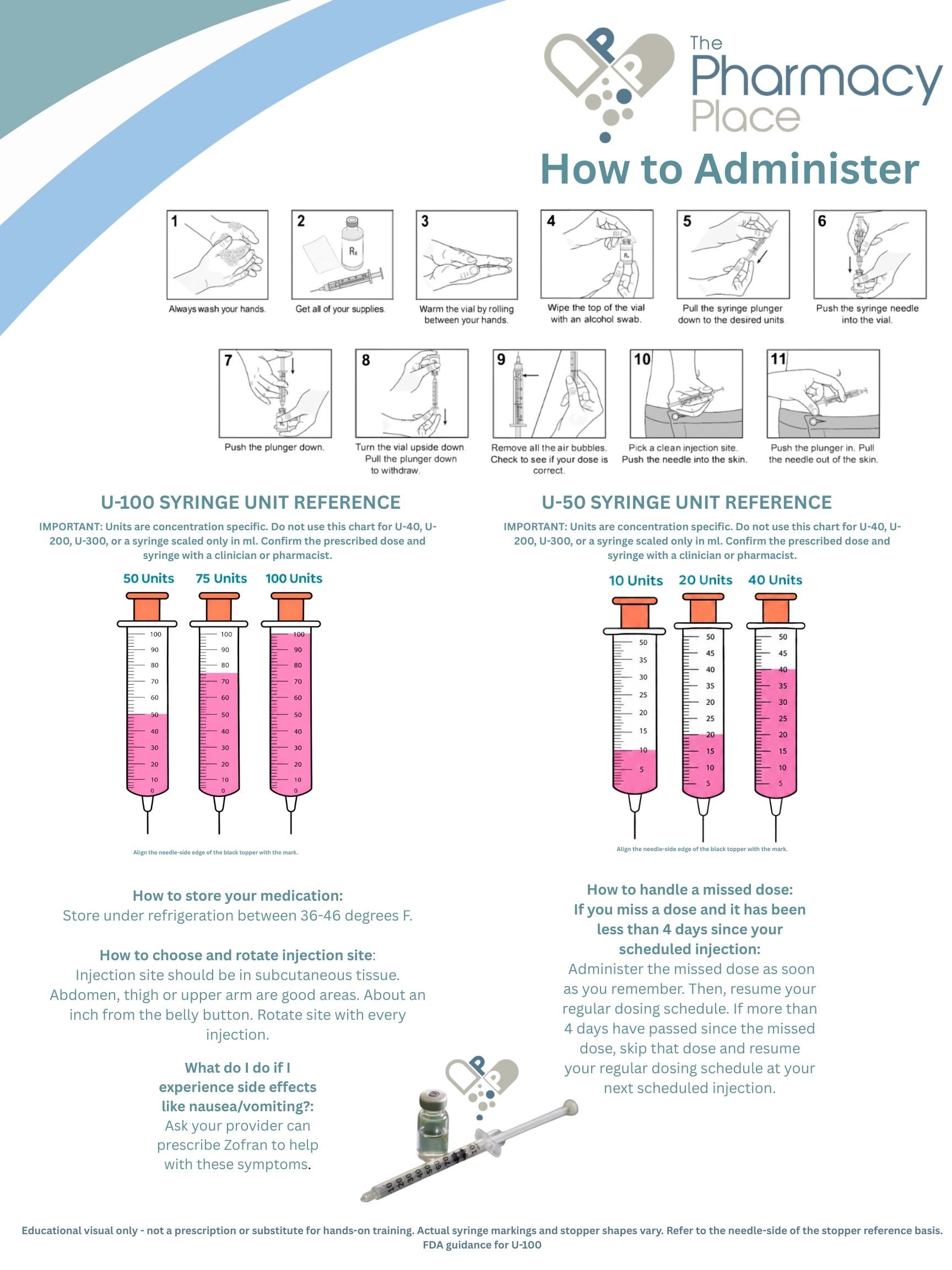
Compounded semaglutide is generally stored under refrigeration – typically between 2°C and 8°C (36°F to 46°F) – and carries a beyond-use date assigned by the pharmacy based on stability data. Patients should follow storage instructions carefully, never freeze the preparation, and inspect the solution for particulate matter or discoloration before each use.
Speak With Your Healthcare Provider
Patients considering compounded semaglutide should have a thorough conversation with their prescribing provider. This discussion should cover the clinical rationale for prescribing a compounded preparation, the current regulatory status, what is known and unknown about the specific formulation being dispensed, and how treatment response and safety will be monitored over time. Self-administration of any subcutaneous injectable also requires proper training in injection technique and site rotation.
Summary
Compounded semaglutide is a pharmacy-prepared GLP-1 receptor agonist formulated by licensed compounding pharmacies under federal and state regulatory frameworks. It may be prescribed when a patient’s clinical circumstances are best served by a compounded preparation. Both the prescribing provider and dispensing pharmacy carry significant responsibility for ensuring quality and appropriateness. Patients are encouraged to work with licensed healthcare professionals.
This article is for general educational purposes only and does not constitute medical advice. Consult a qualified, licensed healthcare provider before starting, stopping, or adjusting any medication.
(function(){function run(){var target=”what is compounded semaglutide?”;var seen=false;var nodes=document.querySelectorAll(‘h1’);for(var i=0;i<nodes.length;i++){var t=(nodes[i].textContent||'').replace(/\s+/g,' ').trim().toLowerCase();if(t===target){if(seen){nodes[i].style.display='none';}else{seen=true;}}}}if(document.readyState==='loading'){document.addEventListener('DOMContentLoaded',run);}else{run();}})();
About the Author
The Pharmacy Place
June 11, 2026